 Toggle navigation
614-452-4280
Cannot Drive?
Ask about Pick-Up/Home Testing Programs
Toggle navigation
Cannot Drive?
Ask about Pick-Up/Home Testing Programs
Express Service in Central Ohio | Mon-Fri: 8am-4pm | NO charge NO wait |
View Details
Monday-Friday: 8am-4pm
NO charge & NO wait!
Cleaning
Filter Change
Diagnostics
Instructional Care
Microphone Check
Receiver Check
Tip Replacement
Tube Replacement
Connect Hearing Aids to Phone
Untreated hearing loss can impact far more than communication. Research shows it may contribute to cognitive decline, depression, social isolation, balance issues, and other health concerns including diabetes, cardiovascular disease, and tinnitus. Understanding these connections can help you take steps toward better hearing and overall wellness.
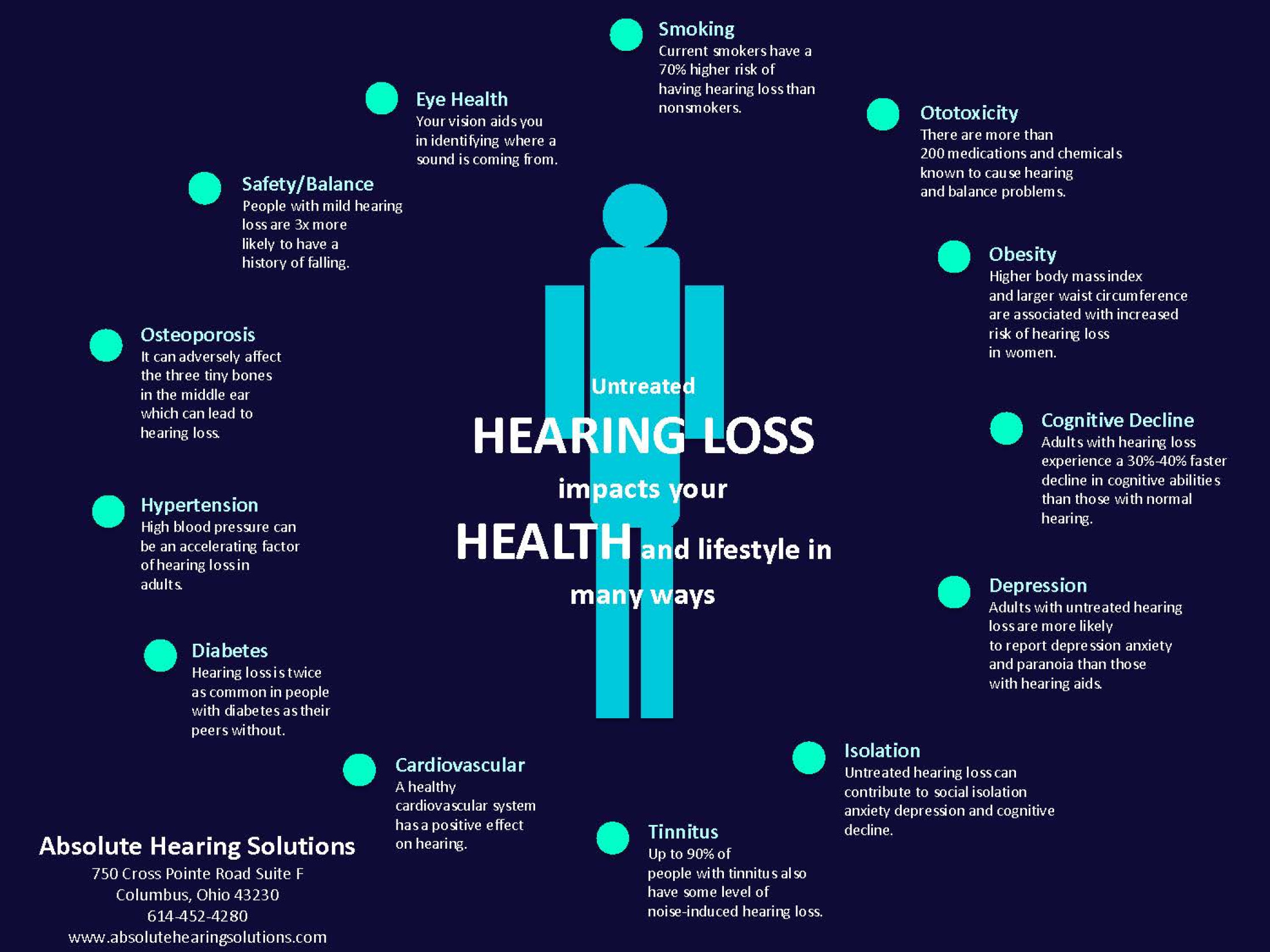
Untreated hearing loss may impact cognition, balance, mental health, and overall wellness.
Research shows that untreated hearing loss may increase the risk of cognitive decline and dementia. When the brain receives fewer sound signals, it must work harder to process conversations and everyday sounds. Over time, this extra strain can affect memory, concentration, and mental sharpness. Adults with hearing loss may experience a 30%–40% faster decline in cognitive abilities compared to those with normal hearing.
Untreated hearing loss can affect emotional well-being and mental health. Difficulty communicating with family, friends, and coworkers may lead to frustration, stress, anxiety, and feelings of loneliness. Studies show that adults with untreated hearing loss are more likely to report symptoms of depression and social withdrawal than those who use hearing aids or receive treatment.
Hearing loss often makes conversations more difficult, especially in restaurants, family gatherings, or noisy environments. Many people begin avoiding social situations because listening becomes exhausting or embarrassing. Over time, this can contribute to social isolation, reduced confidence, anxiety, depression, and cognitive decline.
Tinnitus is commonly described as ringing, buzzing, hissing, or roaring sounds in the ears. Up to 90% of people with tinnitus also have some degree of hearing loss, often caused by noise exposure or aging. Hearing treatment and hearing aids may help reduce the perception of tinnitus by improving access to surrounding sounds.
Your hearing health is closely connected to your cardiovascular health. The inner ear depends on healthy blood flow to function properly. Conditions that reduce circulation, such as heart disease or poor cardiovascular health, may damage delicate structures in the ear and contribute to hearing loss. Maintaining a healthy heart can also support better hearing health.
Hearing loss is nearly twice as common in people with diabetes compared to those without diabetes. High blood sugar levels may damage the tiny blood vessels and nerves in the inner ear, affecting hearing over time. Managing diabetes through healthy lifestyle choices and regular medical care may help reduce the risk of hearing-related complications.
High blood pressure can reduce healthy blood flow throughout the body, including the inner ear. Over time, hypertension may damage the sensitive structures responsible for hearing and balance. Adults with uncontrolled high blood pressure may have an increased risk of developing hearing loss as they age.
Osteoporosis weakens bones throughout the body, including the three tiny bones in the middle ear that help transmit sound. When these bones become fragile or damaged, hearing ability may be affected. Some studies suggest a connection between reduced bone density and an increased risk of hearing loss.
Hearing plays an important role in balance and spatial awareness. People with even mild hearing loss are up to three times more likely to have a history of falling. Difficulty hearing environmental sounds may reduce awareness of surroundings and affect balance, increasing the risk of slips, trips, and injuries.
Vision and hearing work together to help you understand your environment and identify where sounds are coming from. When hearing loss occurs, people often rely more heavily on visual cues like facial expressions and lip reading. Poor eye health combined with hearing loss can make communication and navigation more difficult.
Smoking may damage blood vessels and reduce oxygen flow to the inner ear, increasing the risk of hearing damage. Studies show that current smokers have a significantly higher risk of hearing loss than nonsmokers. Exposure to secondhand smoke may also negatively affect hearing health.
More than 200 medications and chemicals are known to be ototoxic, meaning they may damage hearing or balance function. Certain antibiotics, chemotherapy drugs, pain relievers, and high doses of medications can contribute to hearing loss or tinnitus. If you notice changes in hearing while taking medication, consult your healthcare provider.
Research suggests that higher body mass index (BMI) and larger waist circumference may increase the risk of hearing loss. Obesity can contribute to poor circulation, inflammation, and other health conditions that affect the inner ear. Maintaining a healthy weight through diet and exercise may support better overall hearing health.
If you are experiencing signs of hearing loss, tinnitus, or difficulty understanding conversations, the team at Absolute Hearing Solutions is here to help. Our comprehensive hearing evaluations are designed to assess your hearing health and identify the best treatment options for your lifestyle and needs. Contact us today to schedule your appointment and take the first step toward better hearing and improved quality of life.
Voted #1 Hearing center in Columbus, OH!

























Receive information about hearing aids, free seminars, advanced testing & more.
Monday-Friday: 8:00am-8:00pm
Saturday-Sunday: Appointment Only
We are available for special evening hours. Just ask!
614-452-4280